Educational content only. This site is for informational purposes — not medical advice. Dialysis patients should consult their nephrologist and care team before making any treatment, travel, or supplement decisions. Coverage information may vary by plan and location.

Your Treatment Schedule
Shouldn't Dictate
Your Horizons.

MAVTG connects dialysis patients with verified clinics in destinations worldwide. Travel on your terms.

6 years on active dialysis · 3 continents traveled · DaVita patient, Tampa FL · Active kidney transplant waitlist since Aug 2025
Weekly Dialysis
6+
Yrs Waitlisted
45K
Words Written

“I sold my race cars, drove to Florida for a shorter waitlist. I made my peace with the diagnosis in the chair. That’s where MAVTG was born.”

— Michael Moore  ·  I Missed the Signs
';return d;}()))" >

"I sold my race cars, drove to Florida for a shorter waitlist. MAVTG was born in that dialysis chair."

— Michael Moore, I Missed the Signs
Multilingual Coordinator Verified
Emergency Backup Clinic Guarantee
International Clinical Standards
Patient-Founded & Patient-Led

Three Steps. One Seamless Journey.

Pick a Paradise

Choose any destination — coast, city, or mountain. Tell us where you want to go and when. We handle everything else.

We Align the Chairs

Our coordinators contact verified clinics, confirm your dialysis schedule, gather your medical records, and lock in your treatment slots before you board.

Fly with Confidence

Travel with a full treatment itinerary, emergency backup contacts, and a MAVTG coordinator available throughout your trip.

Are You Ready to Travel?

Answer four quick questions and get a personalized pre-trip checklist built for dialysis patients.

What is your CKD stage / treatment type?

What type of travel are you planning?

How long is your planned trip?

Have you traveled for dialysis before?

Your Personalized Pre-Trip Checklist

Book a Travel Consultation →

Dialysis Clinics Worldwide

Sample verified clinic locations in MAVTG destinations. Our coordinators confirm availability and book your treatments before you travel. Map data is representative — contact us for current availability.

Map uses OpenStreetMap data © OpenStreetMap contributors. Clinic markers are representative sample locations for illustrative purposes.

Watch: A Patient's Perspective

From a drag strip to a dialysis chair to building a travel platform — Michael shares what living with Stage 5 CKD has taught him about resilience, advocacy, and keeping your world large.

Video Series Coming Soon · Lived Experience, Not Theory
“Dialysis doesn’t end your life. It restructures it — the question is whether you let that shrink your world, or keep it large.”
6+ Years on
Dialysis
3 Continents
Traveled
Active Transplant
Waitlist
Michael Moore · Founder, MAVTG

Dialysis Travel Planning: The Step-by-Step Guide

No competitor publishes this. I know because I looked — and then I had to figure it out myself. Here is the framework I use for every international trip while on dialysis.

Book Your Clinics First

Book dialysis before flights, hotels, or anything else. Target clinics 60+ days out. Confirm your treatment schedule, machine type (hemodialysis vs peritoneal), and session length. Resources: BookDialysis.com, GlobalDialysis.com, your nephrologist's network.

Pack Smart

Port-access clothing (PICC sleeve hoodies, fistula-access tees), your treatment records, nephrologist letter, extra medications, insurance documentation, and a cold-clinic layer. The chair is always cold.

Arrive Informed

Arrive at your first treatment with printed lab results from the last 30 days, your current medication list, your US care team's contact, and your access site documented. Every new clinic needs this.

Treat, Then Explore

Schedule treatment days for early morning when possible. Most sessions run 3–4 hours. Plan your activities for afternoons and treatment-free days. This is your life — not a medical sentence.

Document Everything

Keep records from every treatment abroad. Your US nephrologist needs this. It also builds your case for transplant committees and insurance providers.

What Medicare Won't Tell You About Dialysis Travel

The coverage gap is documented everywhere. It's explained clearly nowhere. Here it is in plain English.

Standard Medicare (Parts A & B)

Does NOT cover dialysis outside the United States in most cases. Emergency coverage may apply in limited border situations with Canada and Mexico. Do not rely on it for planned international travel.

Medigap Supplemental Plans

Plans C, D, F, G, M, and N cover 80% of Medicare-approved foreign emergency care after a $250 deductible, up to a lifetime limit of $50,000. This is emergency coverage — not elective treatment coverage.

Travel Medical Insurance

Your best option for planned international dialysis travel. Look for plans that explicitly cover pre-existing conditions and ongoing dialysis treatments — not just emergencies. Ask your provider specifically: “Does this cover my scheduled dialysis sessions abroad?”

What to Ask Before You Book

Ask your insurance provider: Does my plan cover dialysis abroad? Is this emergency-only or scheduled treatment? What is the per-treatment limit? What documentation does the foreign clinic need to bill my insurance?

This is educational information, not insurance or legal advice. Coverage varies by plan, country, and treatment type. Always confirm with your insurance provider before traveling.

What to Pack: The Dialysis Travel Packing List

Six years of treatment on three continents taught me what matters. Pack these and you handle 95% of what travel throws at you.

Documents & Records
  • Recent dialysis prescription & treatment summary
  • Nephrologist letter clearing you to travel
  • Clinic confirmation letters (printed & digital)
  • Insurance cards & travel-medical policy details
  • Updated medication list with dosages
  • Passport, visas & emergency contact sheet
Medical Supplies
  • At least 7 extra days of all medications
  • Renal-friendly snacks for treatment days
  • Blood pressure cuff & thermometer
  • Hand sanitizer & antiseptic wipes
  • Pill organizer set to the local time zone
  • Wound-care supplies for your access site
Access-Friendly Clothing
  • Tops with easy access to fistula or catheter
  • Zip or snap sleeves — no tight cuffs over access
  • Layers for cold dialysis-clinic rooms
  • Compression-friendly, non-restrictive fits
  • Soft fabrics that don't irritate the access arm
  • A blanket or wrap for long treatment sessions

Most travel clothing isn't built for an access arm. Our adaptive dialysis clothing line is designed for exactly this — treatment-day comfort without the fight. See the adaptive line →

Understanding Dialysis and Chronic Kidney Disease

What it is, how it works, and what no one tells you until you're already in the chair.

What It Is
Your Kidneys, Replaced by a Machine

Hemodialysis filters your blood through a machine when your kidneys can no longer do it — removing waste, excess fluid, and toxins that would otherwise accumulate to fatal levels. At Stage 5 CKD, it is not optional. It is the difference between life and death.

The Schedule
Three Times a Week, Every Week

Most in-center hemodialysis patients treat Monday/Wednesday/Friday or Tuesday/Thursday/Saturday — three to four hours per session. That schedule does not pause for holidays, travel, or inconvenience. Everything else in your life bends around it.

Access
Fistula, Graft, or Catheter

Your vascular access is your lifeline. A fistula (surgically connected artery and vein) is the gold standard — lower infection risk, longer lifespan. A graft uses synthetic tubing. A catheter is inserted directly into a large vein — more portable but higher infection risk. Access type affects what you wear, how you move, and how you travel.

Labs
Numbers That Tell Your Story

Kt/V measures dialysis adequacy — goal is 1.4 or above. Phosphorus, potassium, hemoglobin, and albumin are reviewed monthly. These numbers are not abstractions. They tell you whether dialysis is working, whether your diet is killing you slowly, and whether your body is fighting or surrendering. Ask your team to explain every single one.

Transplant
The Goal Behind the Chair

Dialysis is life-sustaining — not a cure. A kidney transplant is the only path off dialysis. Waitlists vary dramatically by state and blood type. Michael chose Florida over California specifically for a shorter average wait. Stay compliant, stay listed, and keep living fully while you wait. The call can come any time.

The Signs I Missed

For years my body was signaling. I ignored every one. Stage 5 CKD is what happens when you wait too long.

Extreme Fatigue

Tiredness that rest never fixes — your kidneys aren't filtering waste and your body runs on fumes.

Swollen Legs & Ankles

Fluid buildup because damaged kidneys can no longer regulate fluid balance.

Foamy Urine

Protein leaking into urine — a direct kidney distress signal called proteinuria.

Nighttime Urination

Waking multiple times overnight — an early sign that kidney function is changing.

High Blood Pressure

Kidneys regulate blood pressure — damage shows up as stubborn hypertension.

Deep Back Pain

Not muscle pain — a dull ache near the kidneys, below the ribs on either side.

Metallic Taste

Waste accumulating in the blood affects how food and water taste. Most people blame stress.

Brain Fog

Difficulty concentrating — toxins your kidneys should clear are circulating in your bloodstream instead.

If you recognize three or more of these — talk to your doctor today. I recognized all eight and told myself it was just stress. I was wrong.

The Road That Led Here

Every milestone is real. This is not a brand story — it is a medical record dressed in racing stripes.

Age 44
Full Speed Ahead

Racing 8-second quarter miles. Featured in Drag Racer Magazine. Running an IT security career and a performance shop simultaneously — and ignoring every warning my body was sending.

The ICU
Everything Changed

Stage 5. "I woke up and everything had changed." No more racing. A new reality — three chairs a week, every week, for the rest of my life.

The Decision
California vs. Florida

California: a 10–12 year transplant wait. Florida: 5–6 years. I sold the race cars, packed everything, and drove south. Gave up the life I built to buy time for the life I wanted.

The Chair
Where MAVTG Was Born

Three days a week. Every week. Blood type B+, on the TGH waitlist since August 2025. I built MAVTG in that chair. Wrote the book in that chair. Still in that chair — still waiting for the call.

The Mission
Purpose from Pain

MAVTG exists so dialysis patients don't have to stop living. Travel. Move. Explore. The logistics are real — and we handle every one of them so you don't have to.
"Dialysis doesn't end your life. It restructures it. The question is whether you let that restructuring shrink your world — or find a way to keep it large."
Michael Moore — Founder, MAVTG

You Shouldn't Have to Choose

Between dialysis and living. Between treatment and travel. MAVTG handles the logistics so you don't have to.

Dialysis Center Coordination

We locate and pre-book chairs at your destination before you leave home. You show up. We handle the scheduling, insurance verification, and backup plans.

Medicare & Insurance Guidance

Know what's covered before you go. We help you understand your dialysis benefits for domestic travel and navigate the fine print on out-of-network options.

Dialysis-Friendly Cruises

Disney Cruise Line, Royal Caribbean, and select others have onboard dialysis. Most patients never find out. We know how to book it — because we've done it.

Medical Travel Concierge

Flights, hotels, backup centers, emergency contacts. Every itinerary is built around your treatment schedule — not the other way around.

Patient Advocacy Resources

Know your lab results. Know your rights. Know what questions to ask your nephrologist. We share what we've learned from inside — as a patient, not a pamphlet.

✈ Dialysis Travel Help

Traveling on dialysis? MAVTG specializes in medical travel coordination for kidney patients.

We help you find dialysis centers at your destination, sort through travel insurance options, and build an itinerary around your treatment schedule — so your world stays large. Visit mavtg.com/care for our full dialysis travel planning guide and to get personalized help planning your next trip.

Plan My Trip at MAVTG →

The Full Story Is in the Book

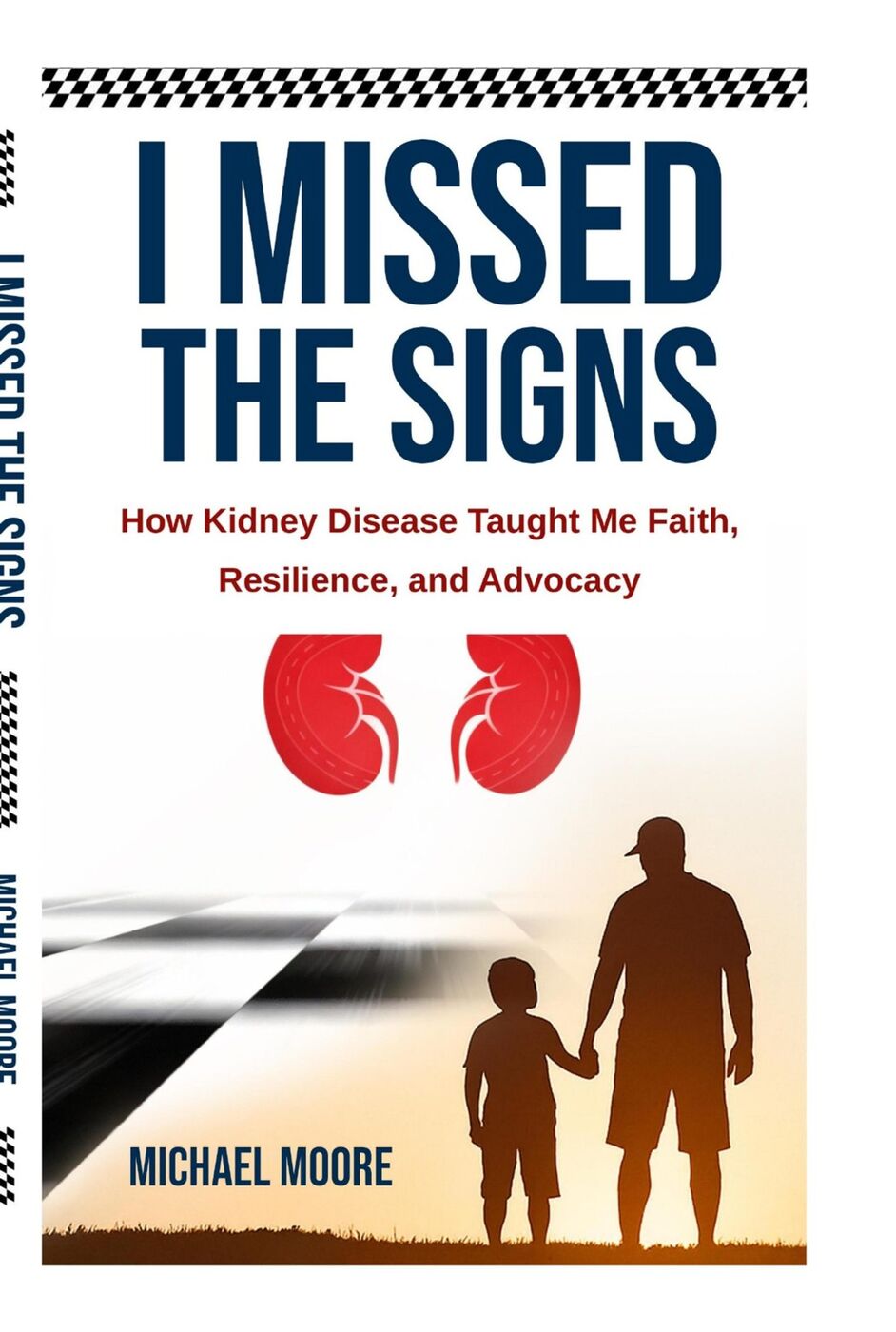
I Missed the Signs by Michael Moore — book cover

45,000 words. Every decision, every warning I ignored, every moment of clarity. I Missed the Signs is the book I wish I had before the diagnosis — written for anyone living in the shadow of kidney disease.

Natural Supplements & CKD

What patients are asking about, what the evidence says, and what you must discuss with your nephrologist before taking anything.

Medical disclaimer: This section is for educational purposes only. Dialysis patients have significantly altered kidney clearance. Many supplements that are safe for the general population can cause dangerous potassium, phosphorus, or fluid buildup in ESRD patients. Never add or remove any supplement without written clearance from your nephrologist and dialysis care team.

Omega-3 Fatty Acids
Generally Studied

Fish oil has been studied for kidney health and inflammation. Some research supports modest benefits for cardiovascular protection in CKD patients. Dosage matters — high doses can affect platelet function. Ask your team about blood-thinning interactions.

Always verify with your care team
Coenzyme Q10 (CoQ10)
Under Research

Dialysis patients often show low CoQ10 levels due to oxidative stress. Early research suggests potential benefit for energy and cardiovascular function. Generally considered lower-risk for ESRD patients, but evidence is not yet conclusive.

Discuss dosage with your nephrologist
Vitamin D3
Often Prescribed

CKD patients commonly have severe Vitamin D deficiency because damaged kidneys cannot activate it properly. Your center likely monitors your levels monthly. Many patients are prescribed active Vitamin D (calcitriol) directly. Do not supplement independently — your levels must be tracked.

Monitor levels monthly — do not self-supplement
Astragalus
Requires Caution

An herb studied in some Asian research contexts for kidney protection. Limited high-quality evidence in Western literature. Some formulations may affect immune function, which is a concern for transplant candidates. Avoid without explicit nephrologist clearance.

High caution — transplant candidates especially
Vitamin C
Strictly Limited

High-dose Vitamin C can cause oxalate accumulation in dialysis patients, which is dangerous. The kidneys normally clear oxalate — yours cannot. Low-dose supplementation (60–100mg/day) is sometimes used to compensate for dialysis-related losses, but only under supervision.

High doses are dangerous for ESRD patients
Herbal Teas & Tonics
Often Overlooked Risk

Many herbal teas — noni juice, star fruit, licorice root, herbal kidney "cleanses" — are actively toxic for dialysis patients. Noni juice and star fruit in particular can cause neurological toxicity in ESRD. Anything marketed as a "kidney cleanse" should be avoided entirely.

Kidney cleanses are dangerous — avoid entirely
Free App · Built by a Patient

CKD Care Companion

A free kidney disease guide and tracker for newly diagnosed CKD patients, dialysis beginners, and kidney patient families.

  • Lab tracking with trend charts
  • AI menu analysis for kidney-safe eating
  • Fluid & weight tracker with dialysis alerts
  • Medication log with phosphate binder reminders

Works offline · No account required · Built from 6 years in the chair

Foundation & Advocacy

The Moore Foundation — built on the belief that patients who've lived it are the best voices to fight for it.

The Foundation
The Moore Foundation — 501(c)(3)

Three pillars: kidney disease awareness, prostate cancer advocacy, and education scholarships. Michael built MAVTG from a dialysis chair — the Foundation exists to extend that mission beyond travel planning, into communities where early detection saves lives. The average ESRD diagnosis comes years after the damage is already done. That is what the Foundation is working to change.

Learn About the Foundation
Patient Advocacy
Know Your Rights as a Dialysis Patient

You have the legal right to choose your dialysis facility. You have the right to your own medical records — including 12 months of labs. Airlines, hotels, and cruise lines must accommodate your medical needs under the ADA. And if a center violates your rights, you have the right to file a grievance without your doctor's permission. Most patients don't know any of this.

Full Patient Rights Guide
"I built MAVTG for the patient who was told their life had to shrink. It doesn't. That's the whole point."
Michael Moore — Founder, MAVTG & The Moore Foundation

Plan My Dialysis Trip

Tell us where you want to go. A MAVTG coordinator will contact you within 48 hours to map out your treatment schedule and travel plan — at no cost.

Do not submit emergency medical information. For a medical emergency, call 911 or your care team. This form is for travel planning only.

We never sell your information. No spam — ever. By submitting you agree to our Privacy Policy. MAVTG health tools are for personal organization and education. We are not a HIPAA-covered entity and do not provide medical advice.

Ready to Travel Again?

We've done this ourselves. We know what it takes. Let's plan your trip.

Get in Touch

Track Your Labs. Manage Your Diet.

The CKD Care Companion app helps dialysis patients monitor lab values, manage fluid intake, and understand their diet — built by a dialysis patient, for dialysis patients.

Explore the CKD App →